
Genioplasty & Chin Surgery: Techniques and Aesthetic Facial Harmony

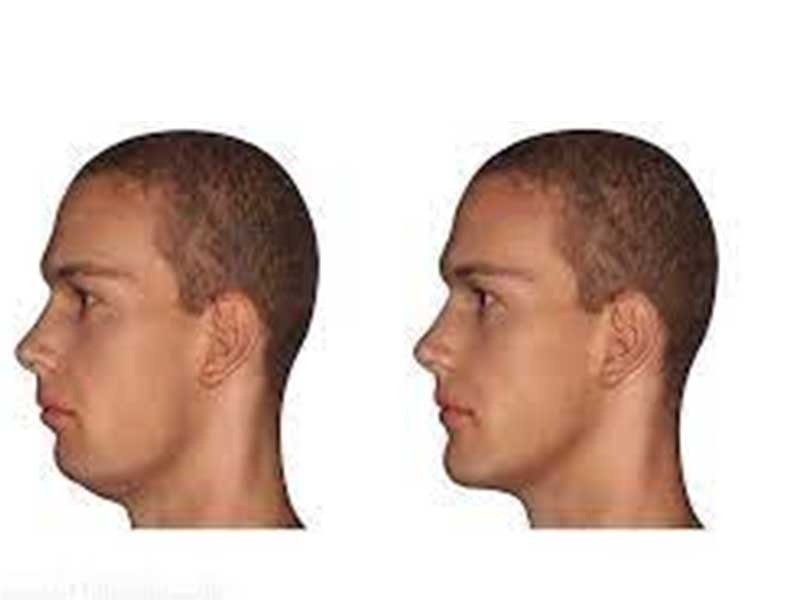
The chin and jawline establish the fundamental architectural foundation of the lower third of the face. In aesthetic facial surgery, chin projection, height, and width work in close synergy with the nasal profile to define facial balance, cervical contouring, and upper airway volume.
The Clinical Synergy Between Chin Projection, Rhinoplasty, and Sleep Apnea
A receding, hypoplastic chin (microgenia) frequently creates an optical illusion that causes a normal or slightly prominent nose to appear disproportionately large. Conversely, an excessively projecting chin can overpower midfacial features.
During facial analysis under Dr. Reyhaneh Heidari’s clinical protocol, the relationship between the lower lip, pogonion (the most anterior projection of the chin), and the cervico-mental angle is systematically evaluated. Combining chin augmentation with preservation rhinoplasty—often termed profiloplasty—produces a balanced facial elegance that cannot be achieved by addressing the nasal structure in isolation.
Furthermore, as an ENT surgeon and Stanford-trained sleep medicine specialist, Dr. Heidari evaluates the functional airway dimension of the lower jaw. When an osseous sliding genioplasty is performed, advancing the anterior mandibular segment pulls forward the attached genioglossus and geniohyoid muscles. This forward repositioning expands the retroglossal hypopharyngeal airway space, significantly reducing nighttime airway collapsibility, snoring, and obstructive sleep apnea (OSA).
Comparison: Osseous Sliding Genioplasty vs. Alloplastic Chin Implants
Both modalities are established techniques in facial contouring, but each addresses distinct anatomical profiles and patient needs:
Surgical Execution and Incision Modality
To deliver seamless, natural outcomes, Dr. Heidari preferentially utilizes an internal intraoral approach inside the lower labial sulcus. Meticulous subperiosteal dissection safeguards the mental nerve branches responsible for lower lip and chin sensation. In sliding genioplasty, a low-speed reciprocating saw creates an atraumatic horizontal osteotomy beneath the canine tooth roots. The mobilized bone is positioned into precise aesthetic alignment using millimeter-measured callipers and secured with titanium osteosynthesis plates.
The 7-Day Care Protocol for International Patients in Tehran
For patients traveling from the Gulf region (UAE, Saudi Arabia, Qatar, Oman, Kuwait) and European countries, Dr. Heidari’s surgical team provides an organized 7-day protocol:
-
1
Day 1: Arrival & In-Person Profilometry Consultation
VIP airport pickup at Tehran IKA. Comprehensive 3D facial photography, cephalometric airway analysis, and surgical planning with Dr. Heidari.
-
2
Day 2: Surgery in Accredited Surgical Hospital
Procedure completed under general anesthesia. An elastic compression jaw band is applied. Discharge to your hotel suite occurs after 4 to 6 hours of monitored recovery.
-
3
Days 3–5: Rest, Soft Nutrition & Dedicated Concierge Monitoring
Maintain a soft, nutritious diet and perform antiseptic chlorhexidine mouth rinses. Daily WhatsApp monitoring by our clinical concierge ensures smooth recovery.
-
4
Day 6–7: Clinical Examination & Airline Fit-to-Fly Clearance
Follow-up visit at our Mahmoudiyeh clinic. Intraoral incision inspection, compression strap removal, post-travel homecare briefing, and issuance of your official fit-to-fly certificate.
Clinical Frequently Asked Questions (FAQ)
Is sliding genioplasty permanent?
Yes. Because sliding genioplasty mobilizes your natural bone and fixates it with rigid titanium plates, the bone fuses permanently through primary osseous healing within 6 to 8 weeks. Unlike fillers or implants, it will never shift, resorb, or require replacement.
Can chin surgery be combined with rhinoplasty in a single operation?
Yes, profiloplasty (combining rhinoplasty and genioplasty) is one of the most popular combinations. Performing both together means a single anesthesia administration, synchronized facial proportions, and one unified 7-day recovery period in Tehran.
Will I experience permanent numbness in my lower lip?
Temporary neuropraxia (numbness or tingling) of the lower lip and chin is normal during the first 2 to 4 weeks due to tissue traction. Under Dr. Heidari’s microsurgical preservation technique, the mental nerves remain anatomically intact, and full sensation typically recovers completely.
Discover Your Ideal Facial Balance & Airway Health
Send clear front and side profile photographs directly to Dr. Reyhaneh Heidari via WhatsApp (+98 919 753 2080) for an individualized facial analysis, airway review, and surgical recommendation.
Have a Question or Wish to Have Your Case Evaluated?
Send your facial photographs and medical history directly to Dr. Reyhaneh Heidari via WhatsApp for an accurate clinical assessment and bespoke surgical plan before traveling to Tehran.
 Medical Guide
Rhinoplasty in Tehran: Comprehensive Guide, Techniques & Costs
Explore the authoritative clinical guide to rhinoplasty in Tehran with Dr. Reyhaneh Heidari. Discover...
Read Full Article Medical Guide
Benefits & Structural Objectives of Functional Cosmetic Rhinoplasty
Discover how functional cosmetic rhinoplasty harmonizes facial appearance with optimal breathing. Learn about septoplasty,...
Read Full Article Medical Guide
Fleshy Nose Rhinoplasty: Surgical Challenges & Structural Techniques
Learn how thick-skinned (fleshy) rhinoplasty achieves lasting definition. Dr. Reyhaneh Heidari explains structural grafting,...
Read Full Article